
Six stops on the water path
Gutter and Downspout Cleaning, Roof to Ground
Rain travels from your roof through the gutter, gooseneck and downspout to a drain, ditch or rock pit. We clear the gutter and downspout, then test that water gets all the way through.
Customer reviews
What customers say
Came out and quoted my gutters the same day I requested it! Came out and cleaned my gutters and did some repair while they were up there for a reasonable price! Going to use them for my windows in the spring. Great service
Amazing! Sent in a request form on their website in the morning, heard back that afternoon, and booked for the next day. Very fast, reliable, and efficient.
They are efficient, hardworking, and reliable. I’ll definitely call them again for other services. Highly recommended!
Why us
Why customers love our service
And why you will get the best gutter cleaning service in the Cowichan Valley!
Fast and efficient gutter cleaning
We turn up on the day we said, clear the whole run, and get off your property without stretching the job out.
Clear and quick communication
You get an answer when you call or text, a price before we start, and a straight account of what we found up at the roof edge.
The best gutter cleaning you have ever had
Consistent five-star reviews from the homeowners we work for.
1000+ happy customers
More than a thousand customers have had us out to clear their gutters.
- Troughs emptied first, so nothing new gets flushed into a cleared downspout
- Outlets and goosenecks cleared by hand where we can reach them
- Every downspout flushed, with the bottom watched for full flow
- Water run into any underground leader to see whether it takes the flow or backs up
- A look at where each downspout empties, including near septic fields
- A plain answer when a blockage is beyond what we can safely clear
A gutter does not get rid of rain. It only collects it. The downspout is the part that moves water off the house, and what happens below the downspout decides whether that water ends up in a ditch, a drain or your crawlspace. On this page we follow the rain from the roof to wherever your property sends it, and point out where it gets stuck on the way.
Stop 1: the roof above the gutter
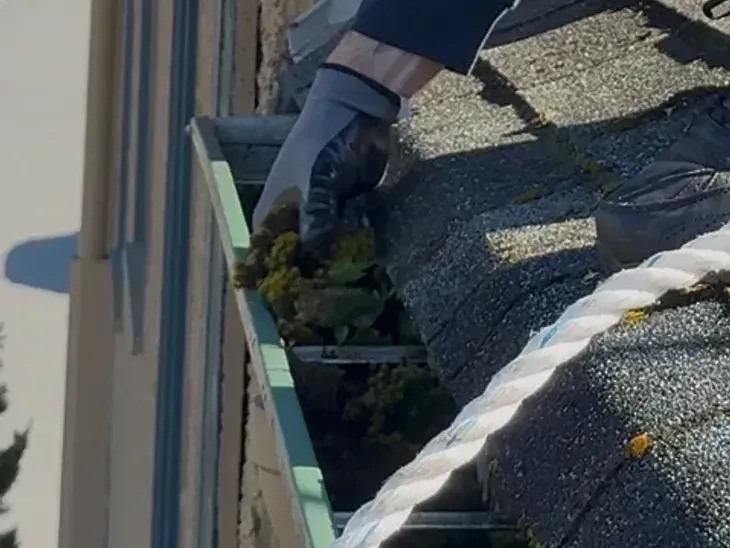
The path starts on the shingles. Valleys, where two roof planes meet, funnel water and debris toward one point on the gutter, and the needle load under a valley is often double what lands anywhere else. Roof moss plays a part too. When it dries out over a Cowichan summer and the fall rain loosens it, clumps wash into the trough and ride the water toward the outlet. Heavy roof moss is a separate job from gutter cleaning, but it often explains why the same downspout keeps blocking.

Stop 2: along the trough to the outlet
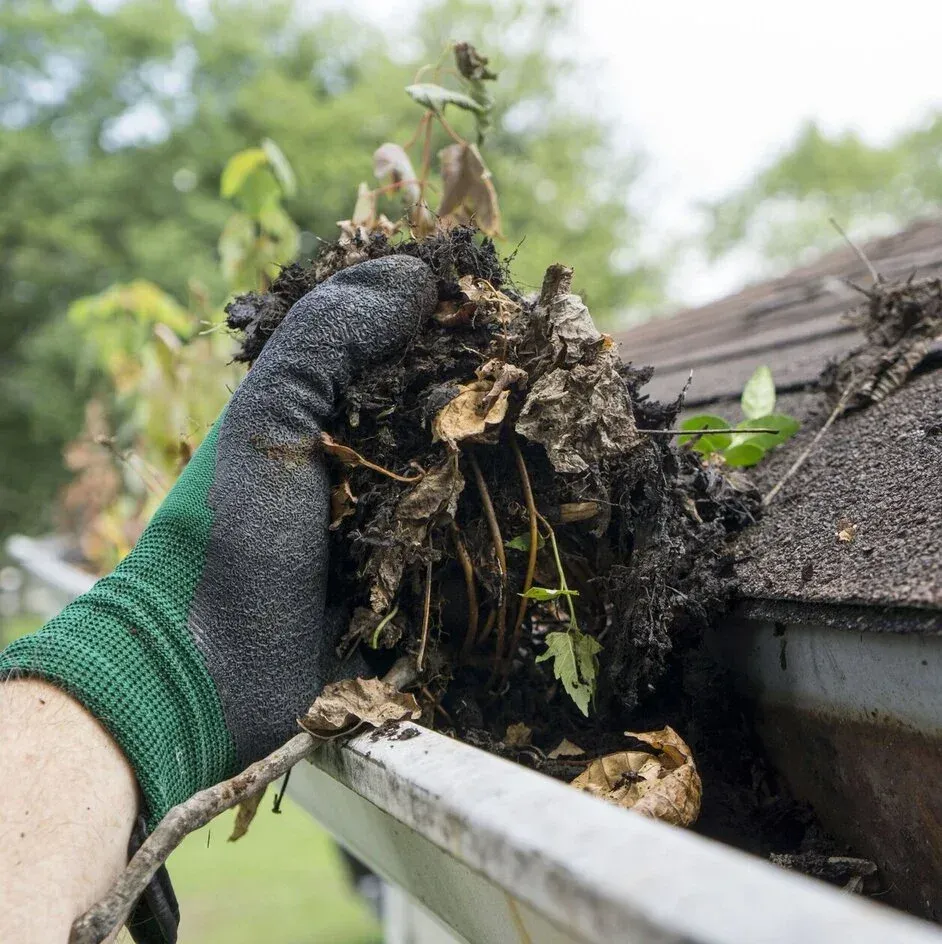
Water runs the length of the gutter to the outlet, the hole where the downspout joins. A trough can be mostly clear and still choked at that one spot, because everything moving along the run ends up there. In this valley the usual culprit is bigleaf maple keys. They ride the water to the outlet and lodge crosswise, and fir needles build a dam behind them. A strainer basket in the outlet helps, until it disappears under a mat of its own.
Stop 3: the gooseneck
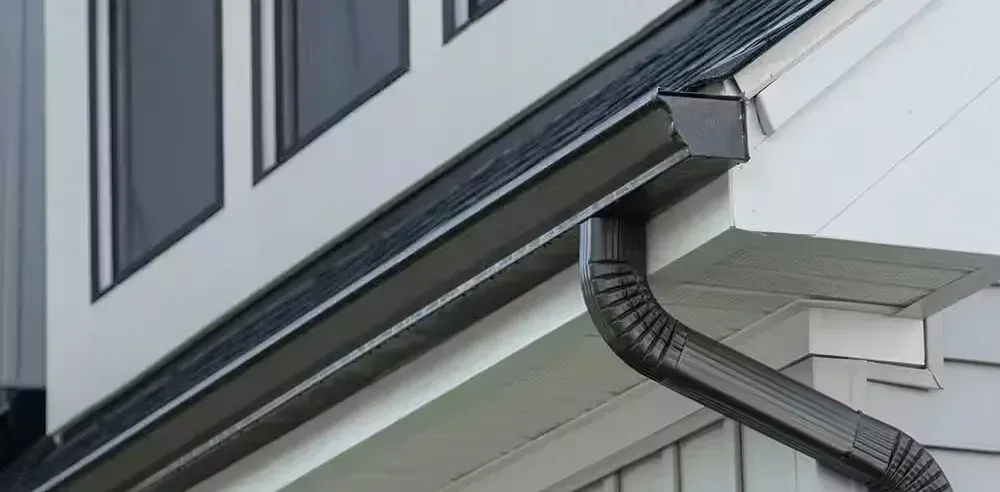
Under the eave, most downspouts take two bends to step back to the wall. That pair of elbows, the gooseneck, is the tightest point on the whole path and the most common blockage we find. A packed gooseneck can hold a column of water above it. During the cold snaps that the higher ground around Shawnigan and Lake Cowichan gets, that water freezes and can split the elbow.
Stop 4: the straight drop
The vertical run down the wall rarely blocks on its own. When it does, there is usually a reason: a second set of elbows halfway down to get around a window or a meter, or a nest built in a downspout that sees little water. Water poured in at the top tells us quickly whether this stretch is open.
Stop 5: the base
At ground level the downspout either ends in a shoe and an extension, or it drops into a pipe in the ground. Extensions get kicked off, mowed over and buried under bark mulch. Underground pipes, called leaders, are where a lot of hidden trouble starts. If the buried line is blocked or broken, water backs up inside the downspout and leaks out of the joints, often right against the foundation.
Stop 6: where the water ends up
This is where the Cowichan Valley differs from a city lot. In Duncan and the more built-up parts of North Cowichan, many leaders run to a municipal storm system. On most rural and semi-rural properties there is no storm main to reach. Roof water goes to a splash pad, a grassed swale, a road ditch, or a rock pit: a buried pocket of drain rock that lets the water soak into the ground. Rock pits silt up with time, and once they are full, the downspout above them backs up however clean it is.
On acreage and lakeside lots we also look at where water lands in relation to the septic field. Roof water should not be soaking into one, and if we see an extension aimed that way, we will point it out.
How it works
Getting Your Gutter Cleaning Booked
Simple from start to finish. Tell us about your home, get a straightforward quote, and let us handle the dirty work.
Tell us about your home
A few details are all we need.
Send us your address, number of storeys, and anything important about the property—trees, access, or a tricky roofline.
Get your quote
We price the job, not a generic house.
Size, height, roofline, access, and debris all matter. We'll give you a clear quote before we start.
We handle the dirty work
You don't need to climb the ladder.
We clear the gutters, clean the downspouts, flush the system, and take the debris with us.
You know what we found
We'll let you know if we spot something.
Loose bracket? Leaking seam? Drainage issue? We'll give you a straightforward heads-up.
That's it.
- You tell us about the house.
- We give you a clear quote.
- We clean the gutters.
- You get one less chore to worry about.
Ready to get your gutters cleaned? Get your quote and let us handle the dirty work.
How we clear and test the path
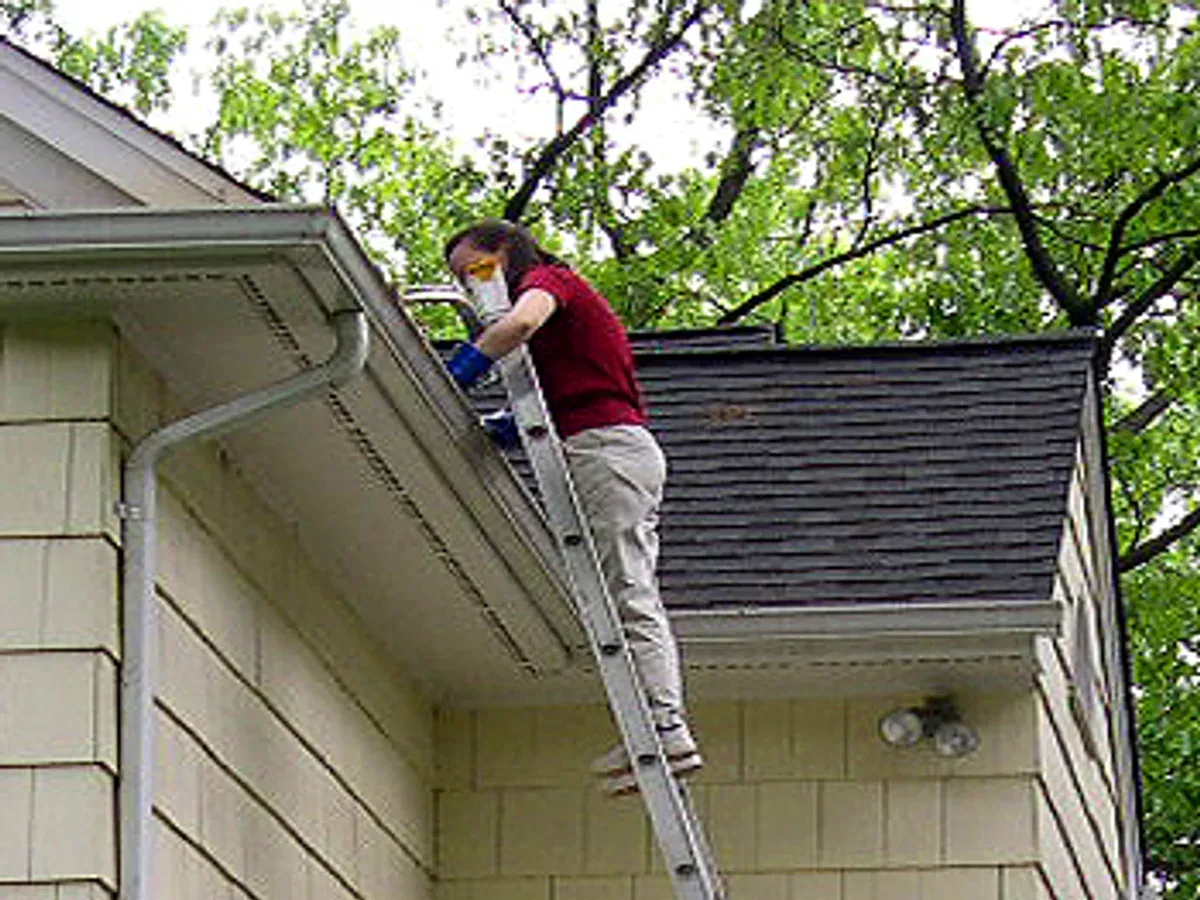
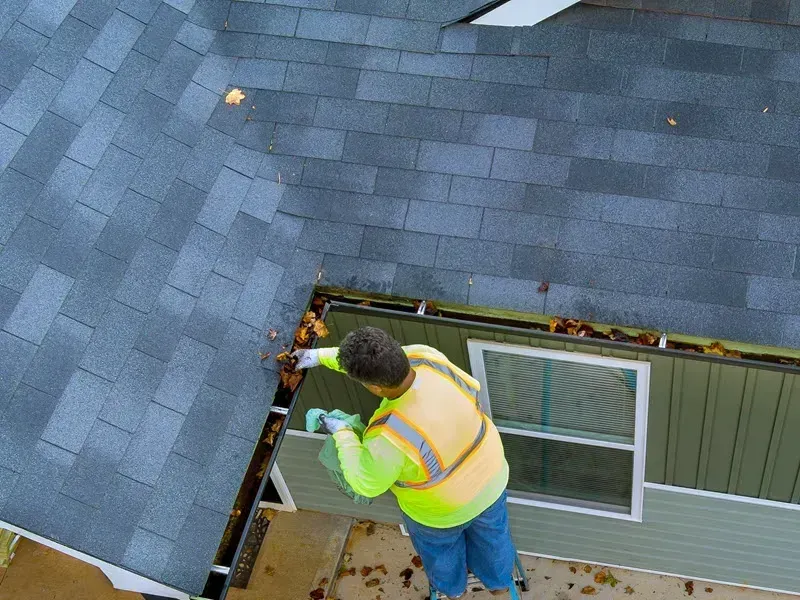
We work from the top down. The gutter is emptied first, so we are not flushing fresh debris into a downspout we have just cleared. Then we clear the outlet and the gooseneck, by hand where we can reach them and with water where we cannot. Then water goes in at the top and we stand at the bottom. Steady, full flow is the only result we accept.
When water goes in and does not come out, the trouble is below ground. Buried lines are not part of our job, but the flush still tells you a good deal. Water that backs up the moment it reaches the joint points to a blockage close to the house. Water that disappears for a while and then rises means the line is filling from somewhere further out, often a silted rock pit. We tell you which one we saw, and which downspout it was, so whoever digs knows where to start.
The work
On the job
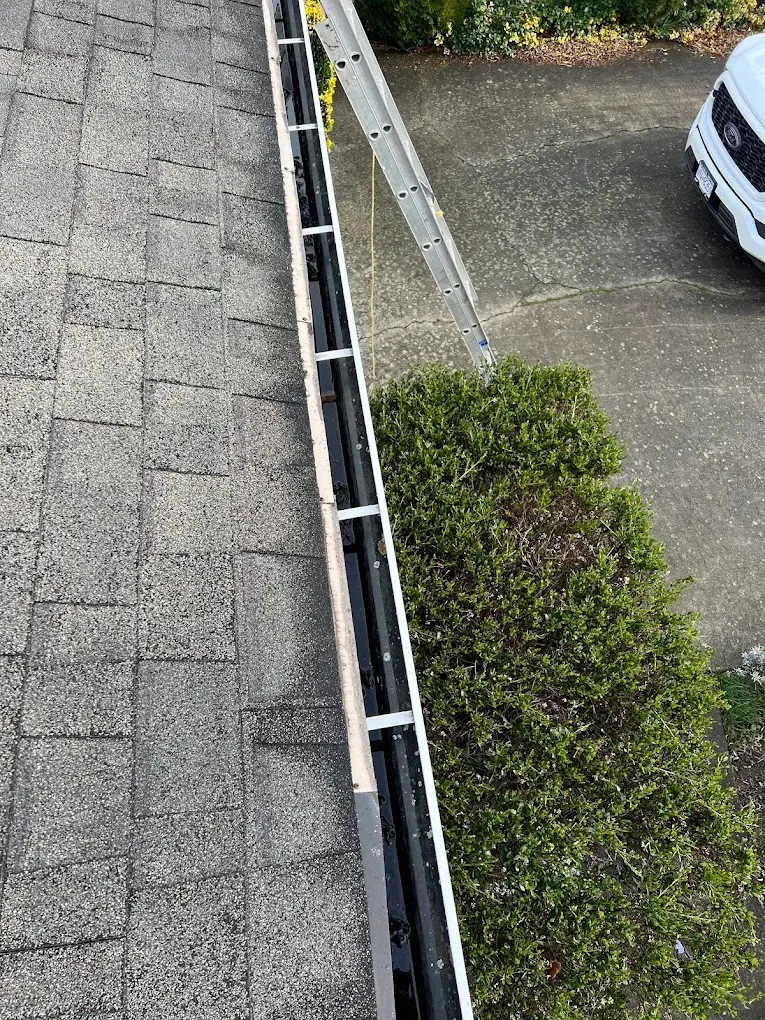
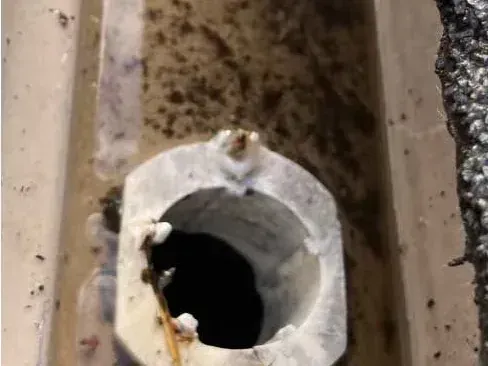
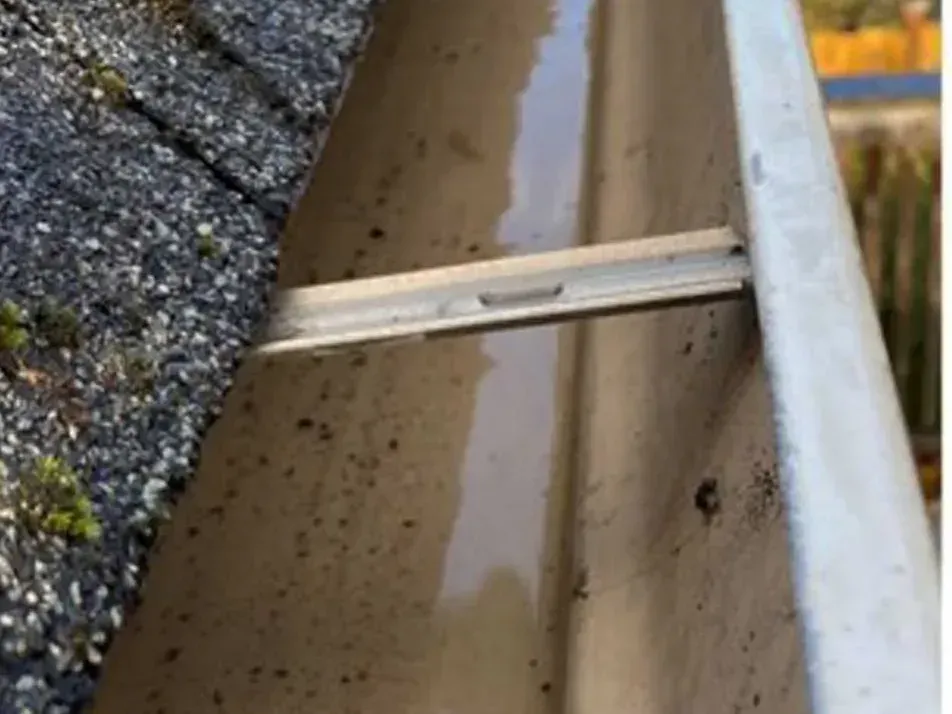
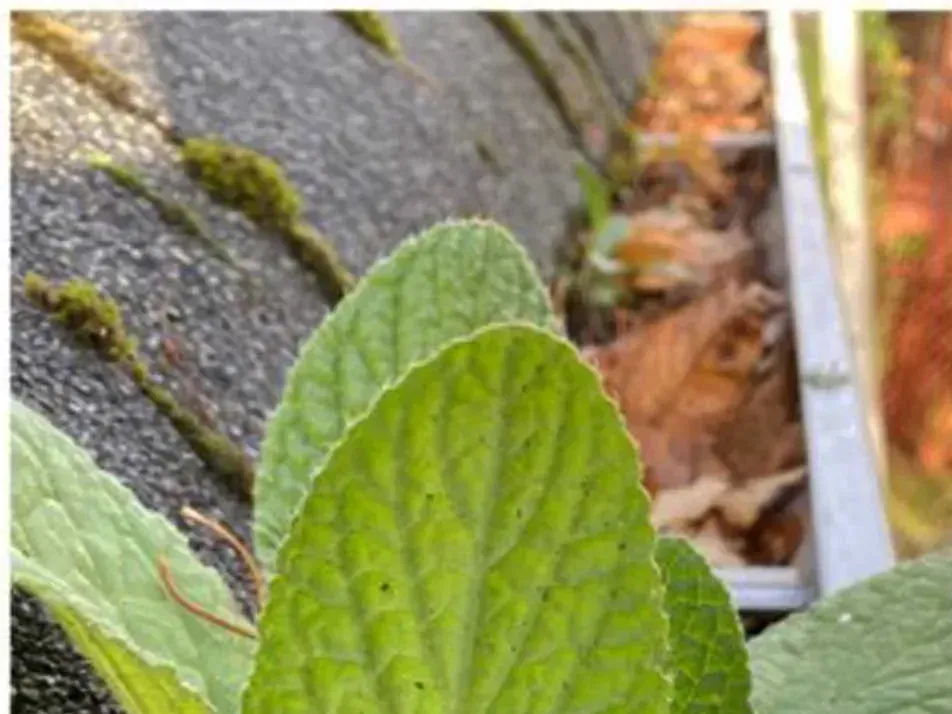
Reading the signs between visits
Stand outside during a good rain and watch. Water sheeting over the front edge at one spot usually means the outlet or gooseneck beneath it is blocked. A downspout that gurgles, or drips from its joints, has something lodged partway down. Water bubbling up from the ground near the base means the leader or rock pit is full. Each sign points to a different stop on the path, which is why we test the whole thing instead of just the part that looks guilty.
Why choose us
Why choose us for gutter & downspout cleaning
Top down, in order
Gutter, outlet, gooseneck, drop, base. Clearing in that order means debris moves out of the system rather than deeper into it.
Full flow at the bottom
The only sign that counts is water coming out the bottom as fast as it goes in at the top. We wait for it.
Rural drainage understood
Ditches, splash pads and rock pits behave differently from a city storm drain, and most valley properties have at least one of them.
Locally owned, fully covered
Insured and WCB-registered, with 10+ years of work on Vancouver Island rooflines and a guarantee on the job.
Got questions?
Downspout questions
Water pours over one corner of my gutter in every rain. Is it the gutter or the downspout?
Usually the downspout, or the outlet that feeds it. When one spot overflows and the rest of the run is fine, water is reaching the outlet and has nowhere to go.
The gooseneck directly below that corner is the first place we check.
My downspouts go into pipes in the ground. Do you check those?
We flush water down the downspout and into the pipe, then watch the joint at the base. If the pipe takes the flow, the path is open. If water climbs back up and spills from the joint, the blockage is below ground.
We do not dig up, clear or repair buried lines. That is a drainage job, and we tell you what we saw rather than leave it looking sorted.
What is a rock pit, and how would I know if I have one?
A rock pit is a hole filled with drain rock, buried in the yard, that roof water soaks away into. They are common on Cowichan Valley properties with no storm drain to connect to.
If your downspouts go into the ground and no one can say where the pipe ends up, a rock pit somewhere downhill is a good guess. Over the years they silt up and drain slower.
Can my downspouts drain into the ditch by the road?
Many rural properties in the valley already do. Whether a particular ditch should take your roof water is a question for your local government or the road authority, not for us.
What we check is that water actually reaches the ditch, rather than pooling against the foundation on the way.
Should roof water drain anywhere near my septic field?
No. A septic field is built to handle what comes from the house, not a roof's worth of rain on top. Soaking it with extra water can stop it working properly.
If we see a downspout or extension pointing toward your field, we will mention it.
Why does my downspout freeze in winter?
Usually because water is sitting in it. A partly blocked gooseneck or a buried leader that will not drain leaves standing water in the pipe, and on a cold night it freezes solid.
It happens more often on higher ground near Shawnigan Lake and Lake Cowichan. Ice can split seams and elbows, which is covered on our gutter repair page.
How do you know a downspout is clear?
We put water in at the top and watch the bottom. Full, steady flow means the path is open. A trickle, a delay, or water spilling from a joint means something is still in there.
We do this on every downspout, not only the ones that look blocked.
Do you check the gutters too, or only the downspouts?
Both. A clear downspout under a full gutter fills up again in the next storm.
We empty the troughs first, then work down. For how the trough itself is cleared, see eavestrough cleaning.
Gutter & Downspout Cleaning in Duncan and the Cowichan Valley
Tell us the address and we will get you a price.